AllBuyingSelling July 7, 2022

What Does an Economic Slowdown Mean for the Housing Market?

If you’ve been watching the news or reading the newspaper you can’t miss all of the talk about a possible recession. The Federal Reserve is trying to engineer a so-called soft landing for the economy as it raises interest rates to fight inflation. Fighting inflation is one of the Federal Reserves’ primary mandates.

According to a recent survey, more and more Americans are concerned about a possible recession. Those concerns were validated when the Federal Reserve met and confirmed they were strongly committed to bringing down inflation. And, in order to do so, they’d use their tools and influence to slow down the economy.

All of this brings up many fears and questions around how it might affect our lives, our jobs, and business overall. And one concern many Americans have is: how will this affect the housing market? We know how economic slowdowns have impacted home prices in the past, but how could this next slowdown affect real estate and the cost of financing a home?

According to Mortgage Specialists:

Throughout history, during a recessionary period, interest rates go up at the beginning of the recession. But in order to come out of a recession, interest rates are lowered to stimulate the economy moving forward.”

Here’s the data to back that up. If you look back at each recession going all the way to the early 1980s, here’s what happened to mortgage rates during those times (see chart below):

What Does an Economic Slowdown Mean for the Housing Market? | MyKCM

As the chart shows, historically, each time the economy slowed down, mortgage rates decreased. Fortune.com helps explain the trend like this:

“Over the past five recessions, mortgage rates have fallen an average of 1.8 percentage points from the peak seen during the recession to the trough. And in many cases, they continued to fall after the fact as it takes some time to turn things around even when the recession is technically over.”

And while history doesn’t always repeat itself, we can learn from it. While an economic slowdown needs to happen to help taper inflation, it hasn’t always been a bad thing for the housing market. Typically, it has meant that the cost to finance a home has gone down, and that’s a good thing.

Bottom Line

Concerns of a recession are rising. As the economy slows down, history tells us this would likely mean lower mortgage rates for those looking to refinance or buy a home. While no one knows exactly what the future holds, you can make the right decision for you by working with a trusted real estate professional to get expert advice on what’s happening in the housing market and what that means for your homeownership goals.

This article provided by Keeping Current Matters.

The information contained, and the opinions expressed, in this article are not intended to be construed as investment advice. Keeping Current Matters, Inc. does not guarantee or warrant the accuracy or completeness of the information or opinions contained herein. Nothing herein should be construed as investment advice. You should always conduct your own research and due diligence and obtain professional advice before making any investment decision. Keeping Current Matters, Inc. will not be liable for any loss or damage caused by your reliance on the information or opinions contained herein.

AllSelling July 6, 2022

How Your Equity Can Grow over Time

It’s true that record levels of home price appreciation have spurred significant equity gains for homeowners over the past few years. As Diana Olick, Real Estate Correspondent at CNBC, says:

“The stunning jump in home values over the course of the Covid-19 pandemic has given U.S. homeowners record amounts of housing wealth.”

That’s great for your home’s value over the last couple of years, but what if you’ve lived in your home for longer than that? You may be wondering how much equity you truly have.

The National Association of Realtors (NAR) has done a study to calculate the typical equity gains over longer spans of time. The data they compiled could be enough to motivate you to move. Just remember, to find out how much equity you have in your specific home, you’ll want to get a professional equity assessment from a trusted real estate advisor.

How Your Equity Grows

Let’s start by establishing how you build equity in your home. While price appreciation is clearly a factor that can help boost your equity, you also build equity over time as you pay down your home loan. NAR explains:

Home equity gains are built up through price appreciation and by paying off the mortgage through principal payments.

Average Equity Growth over Time

The study from NAR breaks down the typical equity gain over time (see graph below). It calculates the equity a homeowner potentially gained if they purchased the median-priced home 5, 10, or 30 years ago and still own it today.

How Your Equity Can Grow over Time | MyKCM

These six-figure numbers are impressive and certainly enough to help you fuel a move into your next home, but they’re not a promised amount. Remember, your own equity gain will be different. It depends on how long you’ve been in the house, your home’s condition, any upgrades you’ve made, your area, and much more.

If you want to find out how much equity you have, partner with a trusted real estate professional for an equity assessment on your home. They can provide an expert opinion on what your house is worth today and how the equity you’ve gained over time can help you when you purchase your next home. It may be some (if not all) of what you need for your next down payment.

Bottom Line

If you’re thinking about selling your house and making a move, home equity can be a real game-changer, especially if you’ve been in your current home for a while. If you’re ready to find out how much equity you have, let’s connect.


This article provided by Keeping Current Matters

The information contained, and the opinions expressed, in this article are not intended to be construed as investment advice. Keeping Current Matters, Inc. does not guarantee or warrant the accuracy or completeness of the information or opinions contained herein. Nothing herein should be construed as investment advice. You should always conduct your own research and due diligence and obtain professional advice before making any investment decision. Keeping Current Matters, Inc. will not be liable for any loss or damage caused by your reliance on the information or opinions contained herein.

AllBuyingVideos July 5, 2022

Tips for Buying Your First House

So you’re ready to buy your first house. Here are a few tip from the Federal Housing Administration (FHA) for you to review. Knowledge is power, especially when it comes to homebuying.  Use this information to become more knowledgeable about the homebuying process.  You
increase your ability to be succeed in achieve your goal of purchasing your new home by taking time to learn more about the homebuying process. Contact me and let’s get you started on the path to homeownership.
AllBuyingVideos July 5, 2022

Affording a Home

Did you know what it takes to afford a home? This presentation by the federal Housing Administration (FHA) helps you to understand what affording a home means.  There’s more to homing a home than paying the principal and interest on a loan. Understanding what it takes to afford a home will help you as you search for your new place. It may seem daunting at first, but there are many reasons why homeownership makes sense for lots of people. Take a look. Contact me when you’re ready to start down the path of homeownership.
AllBuyingVideos July 5, 2022

Qualifying for a Loan

What is one of the most important first steps in your homebuying journey? Getting the pre[approval letter from your lender and qualifying for a loan. Most sellers today will not even entertain an offer for their property without a pre-approval letter is the buyer is financing the purchase of the property. It’s important as a homebuyer that you understand what it takes to qualify for a loan. This presentation provided by the Federal Housing Administration (FHA) will help you understand what it takes to qualify for a loan. Remember — Knowledge is power!
If you have more questions or want to get started on your homebuying journey – Contact me.
AllBuyingVideos July 5, 2022

Dispelling Homebuying Myths

One of the most important aspects of buying a house is understanding what it takes to be successful.  This presentation from the Federal Housing Administration is your opportunity to learn more about homebuying. FHA loans are one of of the most used financing vehicles for homebuyers. Take an opportunity to view this presentation.  Contact me if you have additional questions on purchasing your new home.
My goals is to help you be successful in reaching your real estate goal.
AllBuying July 5, 2022

Is Homeownership Still the American Dream?

Defining the American dream is personal, and no one individual will have the same definition as another. But the feelings it brings about – success, freedom, and a sense of prosperity – are universal. That’s why, for many people, homeownership remains a key part of the American dream. Your home is your stake in the community, a strong financial investment, and an achievement to be proud of.

A recent survey from Bankrate asked respondents to rank achievements as indicators of financial success, and the responses prove that owning a home is still important to so many Americans today (see graph below):

Is Homeownership Still the American Dream? | MyKCM

As the graph shows, homeownership ranks above other significant milestones, including retirement, having a successful career, and earning a college degree.

That could be because owning a home is a significant wealth-building tool and provides meaningful financial stability. The National Association of Realtors (NAR) explains:

Homeownership builds financial security. With 65.5% of Americans owning homes, the net worth of a typical homeowner is nearly 40 times the net worth of a non-owner.”

There are other ways your home acts as more than just a roof over your head, too. The Mortgage Reports highlights a few of the many benefits homeowners enjoy, including:

  • Your equity (and wealth) grows through home price appreciation.
  • Your housing costs are fixed – and that can help combat rising costs from inflation.
  • You’ll have greater privacy and the opportunity to customize your living space.

Plus, homeowners tend to be more active in their community. Like NAR says:

“Living in one place for a longer amount of time creates and [sic] obvious sense of community pride, which may lead to more investment in said community.”

What Does That Mean for You?

If your definition of the American Dream involves greater freedom and prosperity, then homeownership could play a major role in helping you achieve that dream. When you set out to buy, know there are incredible benefits waiting for you at the end of your journey. You’ll have a place you can call your own, feel most comfortable, and grow your wealth.

First American puts it best, saying:

Homeownership remains central to the pursuit of the American Dream. It is a critical driver of economic mobility, delivering financial and social advantages. . . .”

Bottom Line

Buying a home is a powerful decision and a key part of the American Dream. And if homeownership is part of your personal dreams this year, let’s connect and start the process today.

Videos July 1, 2022

Build Your Wealth

AllVideos July 1, 2022

The American Dream Is Still Attainable

All June 30, 2022

A Pause In Mortgage Interest Rate Upward Moves.

A little bit of a breather this week in the upward movement of mortgage interest rates.

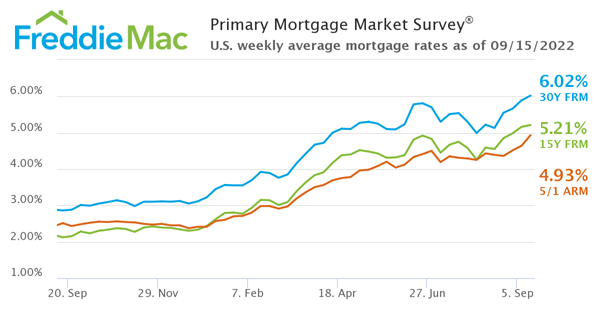
Freddie Mac today released the results of its Primary Mortgage Market Survey (PMMS), showing that the 30-year fixed-rate mortgage (FRM) averaged 5.70 percent.

“The rapid rise in mortgage rates has finally paused, largely due to the countervailing forces of high inflation and the increasing possibility of an economic recession,” said Sam Khater, Freddie Mac’s Chief Economist. “This pause in rate activity should help the housing market rebalance from the breakneck growth of a seller’s market to a more normal pace of home price appreciation.”

  • 30-year fixed-rate mortgage averaged 5.70 percent with an average 0.9 point as of June 30, 2022, down from last week when it averaged 5.81 percent. A year ago at this time, the 30-year FRM averaged 2.98 percent.
  • 15-year fixed-rate mortgage averaged 4.83 percent with an average 0.9 point, down from last week when it averaged 4.92 percent. A year ago at this time, the 15-year FRM averaged 2.26 percent.
  • 5-year Treasury-indexed hybrid adjustable-rate mortgage (ARM) averaged 4.50 percent with an average 0.3 point, up from last week when it averaged 4.41 percent. A year ago at this time, the 5-year ARM averaged 2.54 percent.

For additional information on daily mortgage interest rate movements, check with your mortgage lender. You may also find information on daily mortgage rate movements at online sites such as Mortgage News Daily.